
Open Banking Payments - Faster, Cheaper, and Fraud-Resistant by Design
Open banking is the most significant structural change to the global payments landscape in a generation. By enabling direct, bank-authenticated payment flows that bypass card networks entirely, open banking delivers faster settlement, lower transaction costs, zero chargebacks, and stronger authentication — all in a single payment experience. Inquid.net's open banking platform connects your business to open banking rails across Europe, the UK, and beyond, through one unified integration.
What Open Banking Is — And Why It Changes Everything About How Payments Work
Open banking is a regulatory and technological framework that requires banks to share customer financial data and enable payment initiation through secure, standardised APIs — with the explicit consent of the account holder. In the UK, open banking was mandated by the Competition and Markets Authority and implemented under the Open Banking Implementation Entity (OBIE). Across Europe, the Payment Services Directive 2 (PSD2) created the legal framework for open banking across all EU member states and EEA countries.
For businesses, open banking’s most commercially significant capability is Account-to-Account (A2A) payment initiation — the ability to request a direct bank transfer from a customer, authenticated within the customer’s own banking app or online banking portal, that arrives in your account in real time or near-real time. No card network involvement. No acquiring bank intermediary. No interchange fee. No chargeback risk. Just a direct, authenticated, bank-to-bank transfer that costs a fraction of a card payment to process.
For high-risk merchants in particular, open banking is transformative. The industries that struggle most with chargebacks, decline rates, and processor reluctance — gaming, forex, subscription services, and digital goods — are exactly the industries that benefit most from open banking’s structural advantages. Bank-authenticated payments cannot be disputed as ‘unauthorised’ in the same way card transactions can. The authentication event that takes place in the customer’s own banking environment is legally and operationally far stronger than a card authorisation.
Open banking payments cost businesses up to 40% less than equivalent card transactions — with no interchange fees, no card network assessment fees, and significantly lower fraud-related operational costs. For businesses processing millions per month, the cost saving alone justifies the integration investment within weeks.
Open Banking Capabilities — Built for Commercial Use at Scale
Variable Recurring Payments (VRPs)
Variable Recurring Payments are open banking's alternative to card-based recurring billing. VRPs allow customers to provide a standing mandate that enables businesses to collect variable amounts directly from their bank account within agreed limits, without requiring re-authentication for each payment. This makes VRPs ideal for subscription services, utility billing, and other recurring payment models where transaction amounts may vary. They eliminate chargeback risk, reduce processing costs compared to card payments, and are currently available through UK open banking infrastructure, with rollout continuing across European markets under PSD2.
Account Information Services (AIS)
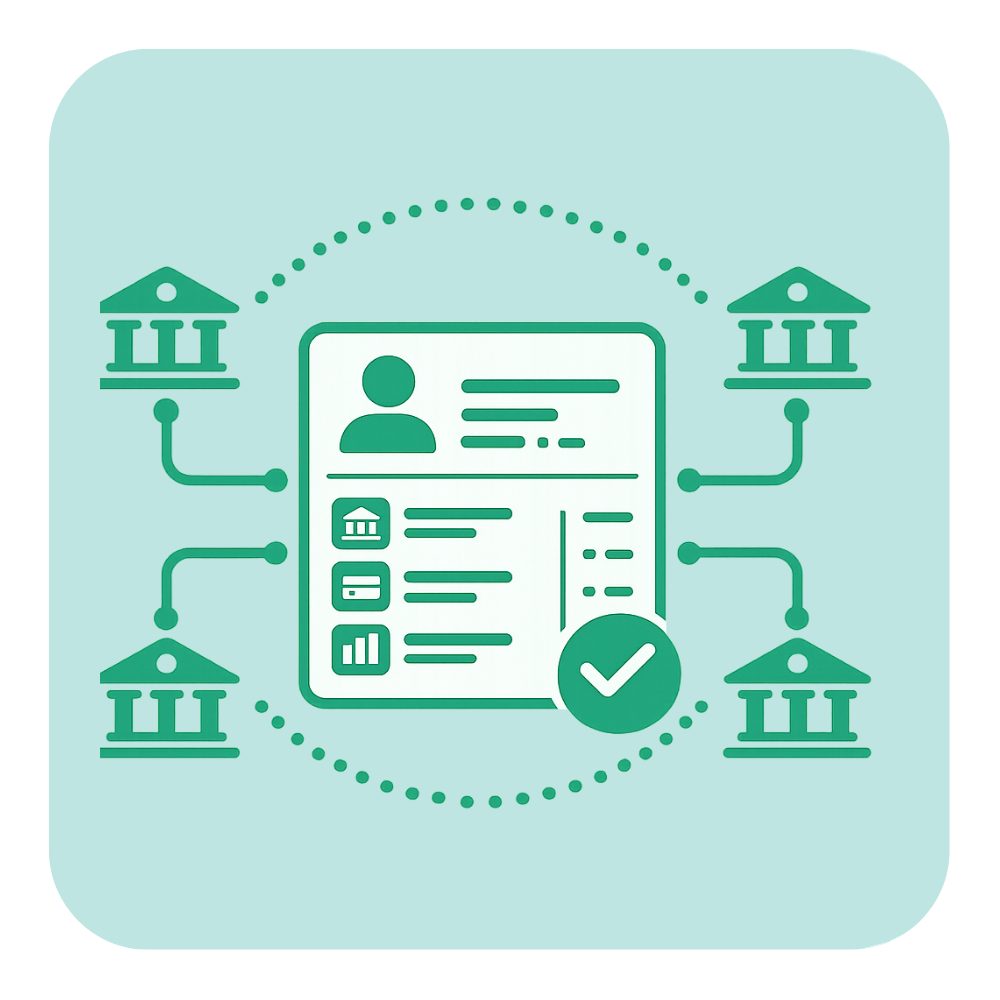
With customer consent, Inquid.net's open banking platform can securely access account balance and transaction history data directly from a customer's bank account. This enables real-time affordability assessments, instant bank statement verification during onboarding, and balance checks that help reduce failed payment attempts. AIS capabilities are particularly valuable for lenders assessing creditworthiness, gaming operators conducting responsible gambling checks, and high-risk merchants that need to verify a customer's financial standing before processing larger-value transactions.
Multi-Country Open Banking Coverage
Inquid.net's open banking platform connects businesses to banks across the United Kingdom and European Union through PSD2 and OBIE-compliant infrastructure. Coverage includes major markets such as Germany, France, Spain, Italy, Poland, and the Netherlands, with additional regions being added as open banking frameworks expand globally. A single integration gives businesses access to payment initiation services across supported markets without requiring separate relationships or technical integrations with each country's individual banking ecosystem.
Single API for All Open Banking Payments
Managing direct integrations with individual bank APIs can create significant technical complexity and ongoing maintenance requirements. Inquid.net simplifies this process by providing a single, standardised API that normalises connectivity across all supported banking institutions. Development teams integrate once and gain access to payment initiation services across connected banks through a unified interface. Pre-built plugins for major e-commerce platforms further accelerate deployment and reduce implementation effort for supported merchants.
Intelligent Payment Retry & Failure Handling
Open banking payments may occasionally fail because of insufficient funds, temporary bank API issues, customer abandonment during authentication, or account-level restrictions. Inquid.net's platform is designed to manage these scenarios efficiently by returning clear failure reasons, presenting alternative payment options where appropriate, and enabling seamless retry experiences. For recurring collections, intelligent retry logic operates within the parameters of the customer's authorised mandate to maximise successful payment recovery while maintaining compliance.
Strong Customer Authentication (SCA) Compliance
The European Union's PSD2 framework requires Strong Customer Authentication for most online payment transactions. Open banking payments are inherently compliant because customer authentication takes place directly within their trusted banking environment and satisfies regulatory requirements by design. For businesses concerned about the conversion impact of card-based 3D Secure challenges, open banking offers a payment experience that remains fully compliant while often delivering a faster, more intuitive, and customer-friendly authentication journey.
The Open Banking Payment Flow — Step by Step
Open banking payments follow a distinct flow from card payments. Understanding this flow is important for designing a checkout experience that converts well and communicates clearly to customers unfamiliar with bank-direct payment methods.
Variable Recurring Payments are open banking's alternative to card-based recurring billing. VRPs allow customers to provide a standing mandate that enables businesses to collect variable amounts directly from their bank account within agreed limits, without requiring re-authentication for each payment. This makes VRPs ideal for subscription services, utility billing, and other recurring payment models where transaction amounts may vary. They eliminate chargeback risk, reduce processing costs compared to card payments, and are currently available through UK open banking infrastructure, with rollout continuing across European markets under PSD2.
The customer is redirected to their bank's secure app or online banking portal. They authenticate using their bank's own security methods — biometrics, PIN, or two-factor authentication — and review the payment details including the exact amount and your business name as the payee. This authentication is performed by the customer's own bank, using the bank's own security infrastructure, which is legally and operationally far stronger than card CVV/AVS verification.
The customer confirms the payment within their banking environment. The bank authorises the payment and initiates the transfer through the Faster Payments Service (UK) or SEPA Instant Credit Transfer (EU). Payment confirmation is returned to Inquid.net in real time, and a webhook notification is sent to your system within seconds of authorisation. Your order management system can trigger fulfilment immediately — no waiting for settlement cycles, no holds, no conditional approvals.
Funds arrive in your nominated account via Faster Payments (UK) or SEPA Instant (EU) — typically within seconds to minutes of the customer's authorisation. No T+1 or T+2 settlement cycle. The money is in your account as fast as the payment rails allow. For UK merchants, Faster Payments operates 24 hours a day, 7 days a week, 365 days a year — including bank holidays and weekends.
Every open banking payment is logged in your Inquid.net dashboard with a unique payment reference, the payer's bank name, the payment amount, the confirmation timestamp, and the funds arrival timestamp. Full transaction data is available via API and in your dashboard for integration with your accounting and ERP systems. The richer payer data returned with open banking transactions — including bank account details and confirmed account holder name — makes reconciliation more straightforward than card transaction matching.
Why Businesses Are Moving to Open Banking Payments
Lower Processing Costs
Open banking payments bypass the card network and acquiring bank fee structures that add 1.5 to 3.5% to every card transaction. Open banking transaction costs are typically a flat fee rather than a percentage — making them dramatically cheaper for higher-value transactions and materially cheaper for any merchant processing significant monthly volumes. For a merchant processing £1 million per month, shifting 30% of transaction volume to open banking at a flat fee versus 2.5% card processing saves approximately £7,500 per month in processing costs alone.
Zero Chargeback Exposure
Bank-authenticated account-to-account payments cannot be disputed as unauthorised transactions in the way card payments can. The customer authenticated the payment personally within their banking environment — there is no equivalent of the card chargeback mechanism for open banking payments. For merchants with elevated chargeback ratios, diverting a portion of transaction volume to open banking is one of the most effective structural chargeback reduction strategies available — and unlike chargeback management tools that react to chargebacks, open banking eliminates the chargeback risk structurally at the payment method level.
Instant Settlement, 24/7
Open banking payments settle in seconds via Faster Payments (UK) or SEPA Instant (EU) — compared to T+1 or T+2 for card payments, which also excludes weekends and bank holidays in many cases. For businesses where cash flow timing matters — travel operators, gaming platforms, subscription services, B2B payment processors — the working capital benefit of instant settlement, available 365 days per year, compounds significantly over time.
Bank-Grade Authentication
Every open banking payment is authenticated using the customer's own bank's security infrastructure — multi-factor authentication, biometrics, and transaction-level authorisation. This authentication standard is significantly stronger than the CVV and AVS checks that protect most card transactions, reducing fraud risk substantially for merchants who adopt open banking as a primary or supplementary payment channel.
Richer Payment Intelligence
Open banking payments return richer data about the payer than card transactions — confirmed bank account details, bank name, and account holder name. Combined with Account Information Services capabilities, open banking gives merchants a more complete picture of their customers' financial standing — valuable for risk management, fraud prevention, and customer qualification in high-risk verticals where understanding a customer's financial capacity before processing a transaction is operationally important.
Perfect for High-Risk Merchants
The industries that face the greatest payment processing challenges — online gaming, forex, subscription services, digital goods — are precisely the industries that benefit most from open banking. Zero chargeback risk, lower transaction costs, instant settlement, and bank-grade authentication address the core payment processing pain points that high-risk merchants experience every day. Open banking does not make a merchant less 'high-risk' in the eyes of acquiring banks, but it provides a payment channel that structurally avoids the card-based risks that generate that classification.
Open Banking FAQs - Answered
Everything you need to know about open banking payments through Inquid.net — from how payments work to compliance, settlement, and integration.
Open banking is a regulated framework that enables authorised third-party providers — like Inquid.net — to initiate payments directly from a customer's bank account, using standardised APIs that banks are legally required to provide. The key difference from a traditional bank transfer is that open banking payment initiation happens within a seamless, consumer-facing checkout flow — the customer does not need to log in to their bank separately, find your bank details, and manually enter a transfer. Instead, they select their bank at your checkout, are redirected to their banking app or portal, authenticate with their bank's own security methods, and confirm the payment — all within a flow that returns them to your checkout with payment confirmed.
Inquid.net's open banking platform covers the UK — where 30+ major banks and building societies are connected via OBIE-compliant Open Banking APIs — and the European Union, where PSD2 mandates open banking API availability across all EU member states and EEA countries. EU coverage includes major banks across Germany, France, Netherlands, Spain, Italy, Poland, and all other major EU e-commerce markets. Coverage is continuously expanding as new banks complete their API implementations.
Open banking payments are currently most suitable as a complementary payment channel alongside cards rather than a complete replacement — primarily because open banking availability varies by market and not all customers have banking apps that support it. However, for UK and EU merchants in particular, and for higher-value transactions where the cost saving versus cards is most significant, open banking can handle a substantial proportion of transaction volume. Many Inquid.net merchants implement open banking as a preferred payment option at checkout and see meaningful volume shift away from card payments over time.
Variable Recurring Payments allow a business to collect payments from a customer's bank account on a recurring basis, with the amount varying between collections, under a standing mandate the customer has agreed to once. The customer authenticates the mandate once and subsequent collections within those parameters happen without re-authentication. For subscription businesses, VRPs offer a bank-direct alternative to card-based recurring billing with no interchange fees, no chargeback risk, no failed payment due to card expiry, and no need to update stored payment details when a customer gets a new card.
Inquid.net's open banking platform handles failures gracefully — returning a clear failure reason to your platform via webhook and presenting the customer with the option to retry or select an alternative payment method. Unlike card declines, open banking failures carry no fraud implication — a payment that fails because of insufficient funds is a straightforward response, not an ambiguous decline. For VRP collections, Inquid.net implements intelligent retry logic within the parameters of the customer's mandate.
Yes — open banking is heavily regulated. In the UK, it is governed by the OBIE and regulated by the FCA. In the EU, it operates under PSD2 regulated by national competent authorities. Inquid.net is an authorised Payment Initiation Service Provider (PISP) operating under the appropriate regulatory frameworks — meaning that payment initiations made through Inquid.net's platform comply with all applicable regulatory requirements, including Strong Customer Authentication requirements. Merchants benefit from this regulatory framework without needing their own PISP authorisation.
The data returned with an open banking payment includes the payer's sort code and account number (UK) or IBAN (EU), the payer's account name, the payment amount and currency, the payment reference, the confirmation timestamp, and the payer's bank name. This data set is richer than what is returned with a card payment. All data handling complies with GDPR and the applicable open banking regulatory framework.
Yes — open banking is particularly well-suited to high-value B2B payments. There are no per-transaction value limits equivalent to card network limits, only the limits the payer's bank applies to their account. The zero-chargeback characteristic is particularly valuable for high-value transactions, and the cost saving relative to card processing is most significant at higher transaction values. For B2B merchants accepting invoice payments, open banking is increasingly the preferred collection method.
Open banking payments settle significantly faster than card payments. In the UK, payments via Faster Payments settle within seconds to minutes of the customer's authorisation — 24/7/365. In the EU, SEPA Instant Credit Transfer settles within seconds during supported hours. Compare this to card payments, which typically settle on a T+1 or T+2 cycle. Inquid.net's open banking dashboard shows the precise settlement timestamp for every payment.
Integrating Inquid.net's open banking payment initiation requires a single API integration. Your development team sends a payment initiation request to Inquid.net's API specifying the amount, currency, payment reference, and redirect URL. Inquid.net returns a payment session URL that redirects the customer to a hosted open banking flow — bank selection, authentication, and payment confirmation — before returning them to your specified redirect URL with the payment result. Webhook notifications deliver real-time payment status updates. Pre-built plugins are available for major e-commerce platforms.
Start Accepting Open Banking Payments with Inquid.net
Lower costs, zero chargebacks, instant settlement — open banking delivers advantages that card processing cannot. Integrate today and start capturing the benefits from your first transaction.
