Introduction
Choosing the right payment gateway can directly affect how easily customers complete purchases, how your business handles transactions, and how effectively you can expand into new markets.
For online businesses, payment processing involves much more than accepting credit and debit cards. Customers may expect digital wallets, bank payments, local payment methods, and multiple currencies. Businesses also need payment infrastructure that supports security, recurring billing, fraud management, reporting, and reliable settlement.
This makes selecting the right payment gateway provider a strategic business decision.
The right solution should match your business model, target markets, transaction volume, preferred payment methods, technology stack, and long-term growth plans. A provider with the lowest advertised transaction fee may not deliver the best overall value, while a provider with extensive features may not be suitable for your specific requirements.
This guide explains how to evaluate payment gateway solutions in 2026, what factors to compare, which questions to ask providers, common mistakes to avoid, and when it may make sense to consider a new payment solution.
Quick Answer: How Do You Choose the Right Payment Gateway?
Choose a payment gateway based on your business model, target markets, payment methods, supported currencies, pricing, security, integrations, settlement terms, fraud controls, recurring-payment capabilities, customer support, and scalability.
The right payment gateway is not necessarily the cheapest option. Businesses should compare the total cost and capabilities of each provider and determine whether the solution can support both current requirements and future expansion.
What Is a Payment Gateway?
A payment gateway is technology that facilitates the secure transmission and authorization of payment information during an online transaction.
When a customer enters payment details at checkout, the payment gateway securely sends the transaction information to the relevant payment-processing infrastructure. The authorization result is then returned to the merchant.
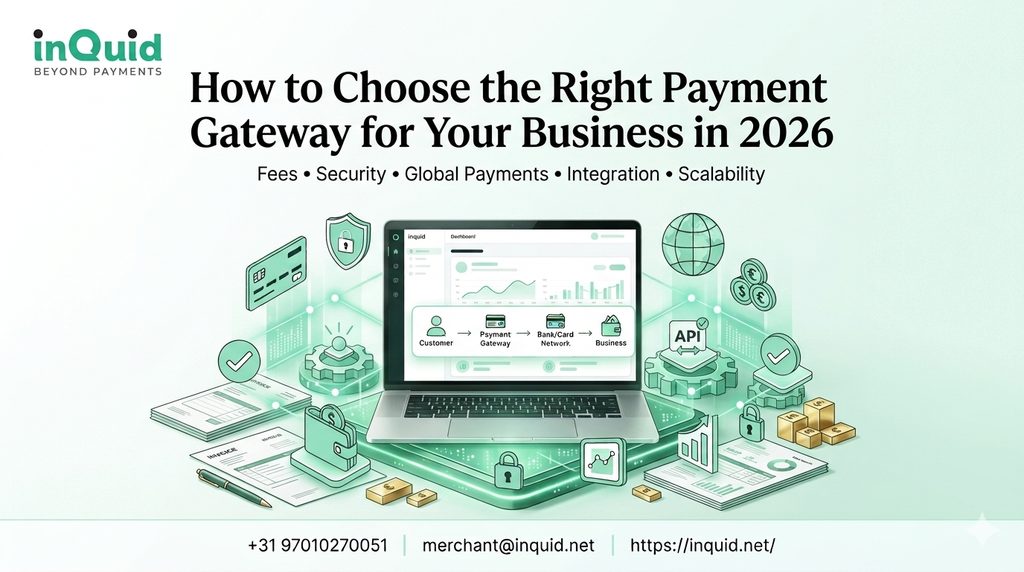
A simplified payment flow looks like this:
Customer → Checkout → Payment Gateway → Payment Processor/Acquirer → Card Network or Financial Institution → Authorization → Merchant
Depending on the provider, an online payment gateway may support:
- Credit and debit cards
- Digital wallets
- Bank payments
- Alternative payment methods
- Recurring payments
- Subscription billing
- Multi-currency transactions
- International payments
- Payment links
- Fraud-management tools
- Transaction reporting
A payment gateway is therefore an important component of a company’s broader payment processing infrastructure.
Depending on the setup, it may operate alongside a processor, acquiring institution, merchant account, bank account, fraud-management tools, and other financial services.
Why Choosing the Right Payment Gateway Matters
The payment experience is an important part of the online customer journey.
A business can have an effective website and competitive products, but customers may still abandon checkout when the payment process is complicated, the preferred payment method is unavailable, or transactions fail unexpectedly.
The right payment infrastructure can help businesses create a smoother payment experience and support operational efficiency.
- Better payment convenience
Customers are more likely to complete transactions when they can use familiar payment methods.
- Support for international expansion
A business expanding into new countries may need an international payment gateway with broader currency and payment-method coverage.
- Reduced payment friction
A streamlined checkout can eliminate unnecessary steps between product selection and completed payment.
- Stronger payment controls
Modern payment infrastructure can support authentication, tokenization, encryption, fraud screening, and other security measures.
- Scalability
A payment solution should ideally be able to accommodate increasing transaction volumes, new markets, additional payment methods, and changing business requirements.
For these reasons, businesses should evaluate a payment provider as part of their long-term infrastructure strategy.
10 Factors to Consider When Choosing a Payment Gateway
1. Supported Payment Methods
Start with the needs of your customers.
Depending on your market, you may need:
- Visa
- Mastercard
- Credit cards
- Debit cards
- Digital wallets
- Bank transfers
- Mobile payments
- Local payment methods
- Alternative payment methods
- Recurring payments
A company serving one domestic market may have relatively simple payment requirements. An international business may need much broader coverage.
For example, an eCommerce company selling across the UK, Europe, and North America may want to support cards alongside locally preferred payment methods.
Before choosing a payment gateway provider, review your transaction data and identify the payment methods customers actually use.
Best practice: Choose a gateway that supports your current payment mix while giving you flexibility to add payment methods as your business grows.
2. Security and Compliance
Security should be a core part of your payment-provider evaluation.
Online payments involve sensitive information, so businesses need appropriate security controls throughout the transaction process.
When evaluating payment gateway solutions, consider capabilities such as:
- Encryption
- Tokenization
- Secure payment transmission
- Fraud monitoring
- Transaction screening
- Customer authentication
- 3-D Secure
- PCI-related security controls
The PCI Security Standards Council maintains the Payment Card Industry Data Security Standard and related security resources for organizations involved in payment card transactions.
Businesses should also consider regulatory requirements that apply to their operations and the providers they use.
For UK-related financial services information, the Financial Conduct Authority provides regulatory information and a public register.
Security should not be judged only by a provider’s marketing material. Ask what controls are available, what standards the provider follows, and which security responsibilities remain with your business.
For card authentication, businesses can also review Visa’s information on 3-D Secure.
3. Geographic Coverage
Not every payment gateway offers the same international capabilities.
If your business plans to accept cross-border payments, evaluate:
- Supported countries
- Supported currencies
- Settlement currencies
- Local payment methods
- International acquiring coverage
- Regional availability
- Country-specific restrictions
A company operating in the UK today might later expand into Germany, France, the United States, or other markets.
Choosing an international payment gateway with the required country and currency coverage from the outset may make future expansion easier.
Do not rely solely on the word “global” in provider marketing. Ask specifically where payments can be accepted, which currencies are supported, and where settlement is available.
4. Transaction Fees and Total Cost
Pricing is important, but the advertised transaction rate is only one part of the total cost.
Depending on the provider and arrangement, businesses may encounter:
- Transaction fees
- Monthly fees
- Setup charges
- International processing fees
- Currency-conversion costs
- Refund fees
- Chargeback fees
- Payment-method fees
- Minimum-volume requirements
Two providers with similar advertised rates can still have significantly different overall costs.
For example, one provider may offer broader international payment coverage, better reporting, more flexible integrations, or fewer additional charges.
Payment Gateway Comparison Checklist
| Factor | What to Evaluate |
| Payment methods | Cards, wallets, bank payments and alternative methods |
| Geographic coverage | Countries where payments can be accepted |
| Currency support | Checkout and settlement currencies |
| Pricing | Transaction, international, FX, refund and chargeback costs |
| Security | PCI-related controls, tokenization and authentication |
| Fraud prevention | Risk screening, monitoring and 3-D Secure |
| Integration | API, plugins, hosted checkout and SDK options |
| Recurring payments | Subscriptions, retries and stored credentials |
| Settlement | Timing, currencies and reserve requirements |
| Reporting | Transactions, refunds, failures and settlement |
| Support | Technical, onboarding and merchant support |
| Scalability | Transaction volume, countries and payment methods |
Always request complete pricing and service information before selecting a provider.
5. Integration and Technical Requirements
Your payment gateway should fit your existing website, application, shopping cart, or business platform.
Depending on your setup, you may need:
- API integration
- Hosted checkout
- eCommerce plugins
- Mobile SDKs
- Payment links
- Subscription billing
- Webhooks
- Developer documentation
- Reporting APIs
An enterprise business with an internal development team may prefer a flexible API.
A smaller business may prioritize easy setup and ready-made integrations.
The most technically advanced provider is not automatically the best choice. The solution should match your technical resources, implementation timeline, and business requirements.
6. Recurring Payments and Subscription Billing
Subscription-based businesses have different payment requirements from businesses processing one-time purchases.
If you operate a SaaS company, membership platform, online education service, subscription business, or recurring service, check whether the payment gateway supports:
- Automated recurring billing
- Payment tokenization
- Stored payment credentials
- Failed-payment retries
- Subscription schedules
- Customer billing management
- Payment recovery tools
A provider that handles one-time transactions well may not provide the subscription features your business needs.
7. Fraud Prevention and Authentication
Fraud prevention is another important element of modern payment processing.
Payment providers may offer tools including:
- 3-D Secure
- Risk scoring
- Transaction monitoring
- Velocity controls
- Address verification
- Device-based risk signals
- Automated fraud rules
- Customer authentication
Businesses should aim for a balance between fraud management and customer convenience.
Controls that are too weak can increase exposure to fraudulent transactions. Controls that are overly aggressive can result in legitimate transactions being challenged or declined.
When comparing providers, ask how their risk tools work, what controls merchants can configure, and how legitimate customers are authenticated.
This is particularly important for businesses with significant credit card processing volumes.
8. Settlement and Payouts
Successful payment authorization is only one part of the transaction lifecycle.
Businesses also need to understand how funds are settled.
Ask providers about:
- Settlement frequency
- Payout timelines
- Settlement currencies
- Supported payout countries
- Reserve policies
- Bank-account compatibility
- Settlement reporting
- Reconciliation tools
Settlement terms can have a meaningful impact on cash flow.
A growing company should therefore understand when funds become available and whether any conditions, reserves, or limitations apply.
9. Reporting and Payment Management
A strong reporting environment can help finance and operations teams monitor payment activity.
Useful capabilities may include:
- Transaction dashboards
- Successful and failed transaction reports
- Refund tracking
- Chargeback reporting
- Settlement reports
- Currency reporting
- Payment-method performance
- Data exports
- Reconciliation support
Suppose an online retailer notices an increase in failed transactions. Detailed reporting may help identify whether the issue is concentrated around a specific payment method, country, device, or transaction type.
Choose a provider that offers enough visibility for your finance and operations teams to manage payment activity effectively.
10. Scalability and Customer Support
Your payment requirements today may be very different from your requirements after international expansion.
Consider whether the payment provider can support:
- Higher transaction volumes
- Additional countries
- Additional currencies
- More payment methods
- Recurring payments
- Multiple sales channels
- Multiple business entities
Customer support should also be part of the evaluation.
Ask whether the provider offers:
- Technical assistance
- Merchant support
- Onboarding assistance
- Documentation
- Account management
- Dispute support
A scalable payment gateway provider should be able to support your growth without forcing you to rebuild your payment infrastructure unnecessarily.
Payment Gateway vs Payment Processor
The terms payment gateway and payment processor are often used interchangeably, but they describe different functions.
A payment gateway facilitates the secure transmission of payment information and the authorization flow during checkout.
A payment processor facilitates transaction communication between the merchant, payment infrastructure, financial institutions, and card networks.
Some payment providers offer both gateway and processing services.
Before signing a contract, determine whether the provider is offering:
- Gateway technology
- Payment processing
- Merchant account services
- Acquiring services
- A combined payment solution
- Additional payment-management tools
Understanding the difference helps businesses compare providers more accurately.
Payment Gateway vs Merchant Account
A merchant account and a payment gateway serve different roles.
The payment gateway facilitates the transmission and authorization of payment information.
A merchant account is part of the infrastructure used to receive and settle card transaction funds for a business.
Depending on the provider and business model, the setup may look like:
Customer → Payment Gateway → Processor/Acquirer → Merchant Account → Settlement Account
Some providers package several of these services together, while others provide them separately.
For businesses that require dedicated high-risk merchant account solutions, understanding this distinction is particularly important.
How to Choose the Right Payment Gateway for Your Business
A structured evaluation can make provider selection much easier.
Step 1: Define your business model
Identify whether you operate an eCommerce store, SaaS company, marketplace, digital services business, subscription business, or another online model.
Step 2: Identify your target customers
Determine where customers are located and which payment methods they prefer.
Step 3: Review transaction volume
Calculate current transaction volume and estimate future growth.
Step 4: Determine your currency requirements
Identify currencies needed for checkout and settlement.
Step 5: Evaluate integration options
Decide whether you need APIs, plugins, hosted checkout, payment links, mobile SDKs, or other tools.
Step 6: Review security requirements
Evaluate authentication, fraud controls, tokenization, encryption, and relevant PCI requirements.
Step 7: Compare total costs
Consider all applicable fees rather than focusing only on the headline transaction rate.
Step 8: Understand settlement
Review payout schedules, settlement currencies, reserves, and reconciliation processes.
Step 9: Consider growth
Think about where your business expects to be over the next 12 to 36 months.
Step 10: Compare providers
Create a scorecard based on the factors that matter most to your business.
This method makes the selection process more objective and reduces the likelihood of choosing a provider based solely on advertising claims.
Real-World Business Scenarios
The following examples are hypothetical illustrations, not Inquid customer case studies.
Scenario 1: International eCommerce Business
Imagine an online fashion retailer operating in the UK and expanding into Germany, France, and the United States.
The company may need:
- An international payment gateway
- Multi-currency capabilities
- Credit card processing
- Alternative payment methods
- Fraud controls
- Mobile-friendly checkout
- International settlement
The retailer should therefore assess the gateway based on international coverage rather than domestic pricing alone.
Scenario 2: SaaS Subscription Business
A SaaS company charging customers monthly has different requirements.
It may prioritize:
- Recurring payments
- Automated retry functionality
- Payment tokenization
- Subscription billing
- Multiple currencies
- Customer payment management
For this business, subscription functionality may be more important than a slightly lower standard transaction rate.
Scenario 3: Growing Digital Business
Consider an online company selling digital services to customers in several countries.
As it grows, it may require:
- Global payment processing
- Multiple currencies
- Credit card processing
- Alternative payment methods
- Payment security
- Reliable settlement
- Flexible integration
The business should choose a solution that can support its current requirements and expected future expansion.
Pros and Cons of Using a Payment Gateway
Pros
- Enables online payment acceptance
- Supports multiple payment methods
- Can simplify checkout
- Provides payment-security capabilities
- Can support international transactions
- Can integrate with eCommerce platforms
- Provides transaction visibility
- Can support recurring billing
- Helps automate parts of payment management
Cons
- Processing fees increase transaction costs
- Certain payment methods may have additional charges
- International transactions can involve additional costs
- Integration can require technical resources
- Provider restrictions may affect certain businesses
- Switching providers can require technical and operational work
- Payment outcomes can depend on multiple parties and controls
The objective is not to find a provider with no disadvantages. It is to find a solution whose cost, functionality, coverage, and limitations are appropriate for your business.
Common Mistakes Businesses Make When Choosing a Payment Gateway
- Choosing based only on price
A low transaction fee does not automatically mean the lowest overall payment cost.
- Ignoring international requirements
A provider that works well domestically may not offer the country, currency, or payment-method coverage required for international expansion.
- Overlooking customer preferences
Not offering preferred payment methods can create unnecessary checkout friction.
- Failing to plan for growth
Your gateway should ideally be capable of handling increasing transaction volumes and additional markets.
- Not reviewing settlement terms
Businesses should understand payout timelines, settlement currencies, and any reserve arrangements before signing an agreement.
- Comparing only the gateway
The gateway may be only one component of the overall payment setup. Businesses may also need processing, merchant-account, acquiring, fraud-management, and settlement capabilities.
When Should You Consider Changing Your Payment Gateway?
Your current payment provider may no longer be the right fit if your business is experiencing:
- Limited payment methods in important markets
- Difficulty accepting international transactions
- Higher-than-expected payment costs
- Poor transaction reporting
- Limited recurring-payment functionality
- Integration constraints
- Settlement requirements that no longer fit your cash flow
- Insufficient fraud-management tools
- Lack of support as transaction volumes increase
- Difficulty obtaining the merchant-account structure your business requires
Before switching, review your transaction history, agreement terms, technical integration, settlement requirements, customer payment preferences, and total costs.
For businesses comparing a new payment processing provider, this exercise can help identify whether replacing or supplementing the current setup is commercially justified.
Payment Solutions Businesses Should Consider
Choosing a payment gateway is only one part of building an effective payment infrastructure.
- Payment Gateway Solutions
Inquid’s payment gateway solutions are designed for businesses that need online payment acceptance and payment infrastructure supporting international transactions, multiple currencies, payment methods, recurring billing, fraud controls, integrations, and transaction management.
- Merchant Account Solutions
Businesses that require dedicated merchant-account infrastructure can explore Inquid’s high-risk merchant account solutions. Requirements vary by business model, industry, geography, and underwriting criteria.
- Credit Card Processing
Businesses that rely heavily on card payments should also evaluate their credit card processing requirements, including supported markets, transaction volumes, settlement arrangements, and payment-management capabilities.
- eCommerce Payment Solutions
Online retailers may need a broader payment setup that covers checkout, payment methods, international processing, and transaction management. Inquid provides eCommerce payment solutions for online businesses with specialized payment-processing requirements.
- Digital Goods and Services
Businesses selling digital products and services can face payment requirements that differ from traditional retail. Inquid provides digital goods and services payment solutions for businesses operating in this area.
- White-Label Payment Solutions
Companies that want to provide payment services under their own brand can consider white-label payment solutions, subject to the provider’s structure, market availability, and applicable requirements.
The right combination depends on your business model, target customers, geographic markets, transaction volume, technical requirements, and growth plans.
Frequently Asked Questions
- What is a payment gateway?
A payment gateway is technology that facilitates the secure transmission and authorization of payment information during an online transaction.
- How do I choose the right payment gateway?
Compare supported payment methods, geographic coverage, currencies, pricing, security, integrations, recurring payments, settlement terms, fraud controls, customer support, and scalability.
- What is the best payment gateway for an online business?
There is no single best payment gateway for every business. The right option depends on your business model, customers, target markets, transaction volume, payment methods, technology requirements, and growth plans.
- Is a payment gateway the same as a merchant account?
No. A payment gateway facilitates payment-information transmission and authorization, while a merchant account forms part of the infrastructure used for receiving and settling card transaction funds.
- Can a payment gateway accept international payments?
Many payment gateway providers support international payment processing, but coverage varies. Businesses should verify supported countries, currencies, payment methods, and settlement arrangements.
- How much does payment processing cost?
Costs vary by provider, business type, transaction volume, geography, and payment methods. Potential charges can include transaction, international, currency-conversion, refund, and chargeback fees.
- Should I choose the cheapest payment gateway?
Not necessarily. A provider should be evaluated based on total cost, payment coverage, security, integration, settlement terms, support, and scalability rather than price alone.
- Can payment gateways support recurring payments?
Many providers support recurring billing, but functionality differs. Subscription businesses should verify recurring billing, tokenization, failed-payment retries, and subscription-management features.
- Why is an international payment gateway important?
Businesses expanding internationally may need support for additional countries, currencies, payment methods, and settlement arrangements. An international payment gateway can help address those requirements, subject to provider coverage.
- What payment methods should an eCommerce business support?
The answer depends on the business’s target customers and markets. Cards are widely used, while digital wallets, bank payments, and alternative payment methods may also be important in specific regions.
- What should I ask a payment gateway provider?
Ask about countries, currencies, payment methods, security, pricing, settlement, recurring payments, fraud controls, integration requirements, support, underwriting criteria, account requirements, and scalability.
How Inquid Can Help
Choosing a payment provider becomes more important as a business enters new markets, expands its payment methods, or increases transaction volume.
Inquid provides payment and fintech infrastructure for businesses with different payment requirements, including payment gateway solutions, merchant account solutions, credit card processing, eCommerce payment solutions, digital goods and services payment solutions, and white-label payment solutions.
When evaluating a new payment solution, businesses should consider their customer base, target countries, preferred payment methods, transaction volume, technical setup, security requirements, and expected growth.
Rather than choosing a provider based solely on headline pricing, the better approach is to build a payment setup that aligns with your actual operational requirements.
Looking for a payment solution that fits your business model and growth plans? Contact Inquid to discuss your payment processing requirements.
Conclusion
Choosing the right payment gateway in 2026 requires more than comparing transaction rates.
Businesses should evaluate the complete payment ecosystem, including payment methods, security, geographic coverage, currencies, integrations, recurring payments, fraud controls, settlement, reporting, customer support, and scalability.
The most suitable payment gateway will depend on your business model and the markets you serve. An international eCommerce company may prioritize multi-currency processing and local payment methods, while a SaaS business may place greater importance on recurring billing and payment recovery.
Before selecting a provider, create a requirements checklist, compare the total cost of each option, review security and settlement arrangements, and confirm that the provider can support your future growth.
For businesses seeking to improve global payment processing, streamline online payments, or establish a more flexible payment infrastructure, choosing the right payment partner can be an important part of long-term growth.
Ready to review your payment setup? Speak with Inquid about your business requirements and explore suitable payment solutions.
Recommended publishing setup
Use “payment gateway” as the focus keyword, but don’t force a fixed 1% density. The revised article uses semantic variations such as payment gateway provider, payment gateway solutions, payment processing provider, international payment gateway, global payment processing, credit card processing, merchant account, eCommerce payment gateway, recurring payments, and alternative payment methods to strengthen topical coverage naturally.
For internal linking, the most valuable links are now concentrated on the payment gateway, high-risk merchant account, credit card processing, eCommerce, digital goods/services, white-label, and contact pages, rather than repeatedly linking the same exact-match anchor.