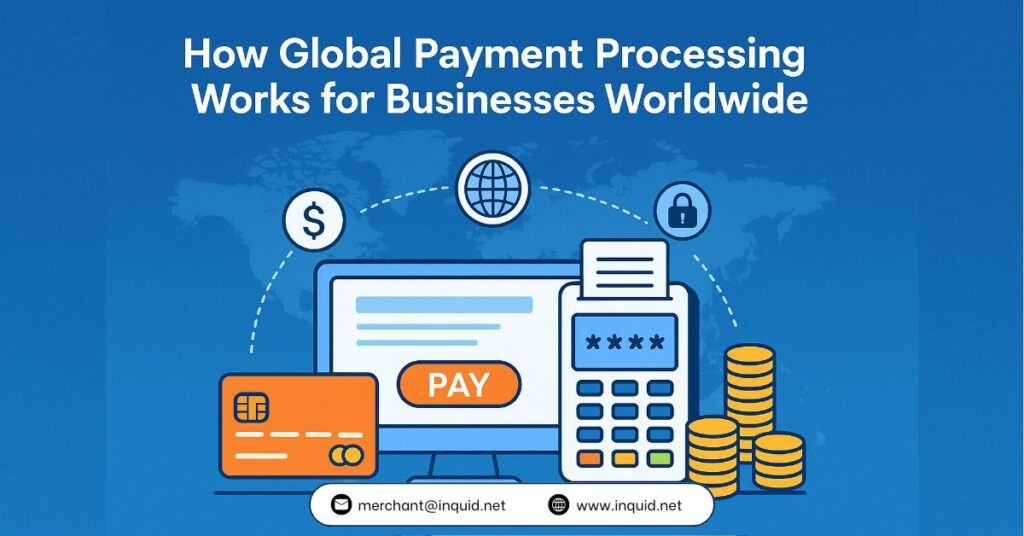
Expanding across borders brings more than just a wider audience—it introduces a complex web of payment systems that every business must navigate. Global payment processing isn’t just about accepting cards from different countries. It involves multiple players, regulatory considerations, risk management, and infrastructure that supports fast, secure, and compliant transactions.
This guide explains how it all works—step by step—so you can better understand the systems behind global transactions and how they apply to high-risk industries like gaming, forex, and IPTV.
What Is Global Payment Processing?
At its core, global payment processing allows a business to accept payments from customers across different countries and currencies. It acts as the bridge between the buyer, their issuing bank, the merchant, and the acquiring bank. For a business to operate internationally, this connection must support multiple currencies, card networks, banking systems, and fraud prevention layers.
If you’re unfamiliar with the basic structure, you can refer to our global payment processing basics blog to get a quick overview before diving deeper.
The Payment Workflow: From Checkout to Settlement
Every transaction starts at checkout. Once a customer submits their payment information, several things happen—almost instantly:
- Authorization Request: The payment gateway collects and forwards the transaction to the acquiring bank.
- Routing to the Card Network: From there, it reaches the card scheme (Visa, Mastercard, etc.), which routes it to the issuing bank.
- Approval or Rejection: The issuing bank either approves or declines the transaction based on available funds, card status, and fraud checks.
- Settlement and Payout: If approved, the funds are held temporarily, then settled and transferred to the merchant’s account—often involving currency conversion along the way.
For businesses dealing with high-risk profiles, this process may also involve additional fraud checks or reserve requirements.
Key Infrastructure Behind Global Processing
To support international payments, you’ll need more than just a checkout page. Here’s what sits underneath:
- Payment Gateway: Handles the encryption and transmission of card data.
- Merchant Account: Receives the funds post-settlement. You can get a merchant account that supports multi-currency operations and high-risk models.
- Acquirer and Processor: These are the financial institutions that help settle transactions between issuing banks and your merchant account.
- Compliance Layers: From PCI DSS to 3D Secure 2.0, regulatory compliance is non-negotiable for global operations.
How It Applies to High-Risk Businesses
Not all industries are treated the same. High-risk sectors—such as forex, adult content, IPTV, gaming, and nutraceuticals—face stricter underwriting and monitoring.
Take forex as an example. Currency conversion is not just a convenience; it’s core to the service. If you’re running a forex platform, you’ll need a payment setup like this one that handles global settlement cycles, liquidity timing, and risk thresholds.
Similarly, for IPTV and online gaming, merchants must work with processors who are experienced in handling chargebacks, geo-restrictions, and alternative payment methods.
Currency, Fees, and Cross-Border Costs
One of the most overlooked aspects of global payment processing is the fee structure. Besides the standard processing fee, you may encounter:
- Currency conversion fees
- Cross-border assessment fees
- Fraud management charges
- Payout delay or rolling reserve percentages
For a detailed breakdown, our credit card processing fees guide offers insight into how these numbers affect your margins.
Choosing a Global Processor That Fits
Look for a provider that supports:
- Multiple acquiring banks (local and global)
- High-risk merchant categories
- Multi-currency support
- Fraud protection tools
- Reliable payouts and reporting
If you’re unsure where to begin, you can contact our team to find out which setup works best based on your target countries and risk level.
Final Thoughts
Understanding how global payment processing works isn’t just for compliance teams or technical staff—it’s essential for anyone running a business that accepts international payments. With the right infrastructure in place, you’ll reduce payment failures, manage risks more effectively, and open your business to wider markets without friction.
FAQs
What is the difference between local and global payment processing?
Local processing handles payments within a single country or currency. Global processing supports multiple currencies, countries, and banking systems.
Why do high-risk businesses need specialized global processing?
High-risk businesses face increased scrutiny, higher chargeback rates, and additional compliance requirements. Global processors with experience in these areas help mitigate risks.
Can I use one merchant account for all countries?
It depends on the provider. Some offer multi-country merchant accounts, while others require region-specific setups. Learn more about merchant accounts here.
How do fees vary in global processing?
Fees vary by currency, payment method, card type, and country. See the full fee breakdown in this article.