
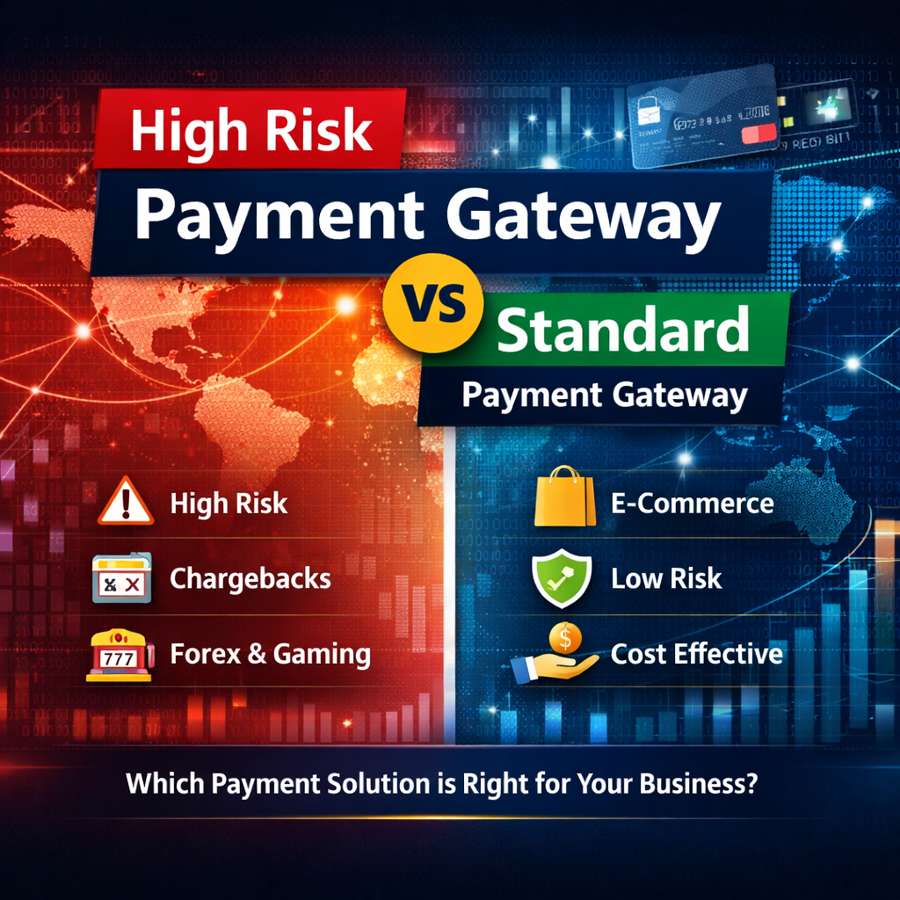
Not all payment gateways operate under the same rules. While some businesses are approved instantly with minimal checks, others face stricter requirements, delays, or even outright rejection.
The difference often comes down to risk classification. Standard payment gateways are designed for low-risk businesses, whereas high risk payment gateways are built to handle more complex transaction environments. Understanding how these two systems differ can help businesses choose the right setup and avoid unnecessary disruptions.
This guide explains how both types of gateways work, the key differences between them, and how businesses can determine which solution is the best fit for their operations.
Understanding How Payment Gateways Work
Before comparing high-risk and standard gateways, it helps to understand what a payment gateway actually does.
A payment gateway is a technology that securely connects a customer’s payment information with the financial institutions responsible for authorizing the transaction. When a customer enters card details or chooses a payment method, the gateway encrypts the data and sends it through several steps.
The process typically involves:
- The customer submitting payment details on the merchant’s website
- The payment gateway encrypting and transmitting the data
- The payment processor forwarding the request to the card network
- The issuing bank approving or declining the transaction
- The response returning to the merchant in seconds
Although this process happens quickly, it involves several systems working together to ensure that payments are secure and authorized properly.
Payment gateways can support multiple payment methods, including card payments, digital wallets, bank transfers, and even cryptocurrency in some cases.
What Is a Standard Payment Gateway?
A standard payment gateway is designed for businesses that fall into low-risk or moderate-risk categories.
These businesses typically operate in industries where fraud levels are relatively low, chargeback rates are minimal, and regulatory requirements are straightforward.
Common industries that qualify for standard payment processing include:
- Ecommerce stores
- Software and SaaS companies
- Online learning platforms
- Digital subscription services
- Retail businesses
Payment providers prefer working with these industries because the financial risks are easier to manage.
Many well-known payment companies operate primarily in this segment, including providers like Stripe and PayPal.
Standard payment gateways usually offer:
- Faster merchant approvals
- Lower transaction fees
- Simple onboarding processes
- Basic fraud protection tools
For businesses that meet their risk requirements, these platforms can provide an efficient and affordable way to accept payments online.
However, the situation becomes more complicated for companies operating in industries that payment processors consider higher risk.
What Is a High Risk Payment Gateway?
A high risk payment gateway is specifically designed for businesses that traditional payment processors may decline due to their industry type or transaction profile.
Payment providers classify certain industries as high risk for several reasons. Some industries experience higher chargeback rates, while others operate in sectors with stricter financial regulations or increased fraud exposure.
Examples of industries commonly considered high risk include:
- Forex trading platforms
- Online casinos and betting platforms
- Adult entertainment websites
- IPTV streaming services
- Cryptocurrency exchanges
- Nutraceutical and supplement companies
Businesses operating in these sectors often face significant challenges when applying for payment processing through standard providers.
High-risk payment gateways are built to support these industries by offering payment infrastructure designed to manage higher levels of risk.
These systems often include more advanced monitoring tools, stronger fraud detection systems, and flexible underwriting processes that account for the unique characteristics of high-risk businesses.
Key Differences Between High Risk and Standard Payment Gateways
Although both systems ultimately perform the same function—processing online payments—they operate very differently when it comes to risk management, approval processes, and operational flexibility.
Industry Support
The most noticeable difference is the type of businesses each system supports.
Standard gateways typically serve businesses in low-risk industries such as ecommerce and digital services. Their policies are designed to minimize exposure to financial risk.
High-risk payment gateways, on the other hand, are specifically built for industries that standard providers often reject. These gateways are structured to accommodate businesses operating in more complex sectors such as online gaming, trading platforms, and global digital services.
Because of this specialization, high-risk gateways play a crucial role in enabling many industries to operate online.
Chargeback Management
Chargebacks are one of the biggest concerns for payment providers.
A chargeback occurs when a customer disputes a transaction with their bank instead of requesting a refund from the merchant. If a business accumulates too many disputes, payment networks such as Visa and Mastercard may impose penalties on the payment provider.
Standard payment gateways maintain strict limits on acceptable chargeback levels. If merchants exceed these limits, their accounts may be suspended or terminated.
High-risk payment gateways are structured to support businesses that naturally experience higher dispute rates. While chargeback management remains important, these systems allow merchants more operational flexibility.
Fraud Prevention Systems
Fraud prevention is another area where the two systems differ significantly.
Standard payment gateways typically use automated fraud detection tools that apply strict filters. These systems may decline transactions that appear suspicious or originate from certain geographic regions.
High-risk payment gateways often use more sophisticated risk management strategies that combine automated monitoring with customized fraud detection systems.
These tools allow businesses to accept legitimate transactions while still identifying potentially fraudulent activity.
Merchant Approval Process
Approval processes are also very different between the two systems.
Standard payment gateways usually offer quick onboarding because the industries they support carry lower financial risk. Merchants can often complete registration and begin accepting payments within a short period of time.
High-risk merchant accounts typically require more detailed underwriting.
Payment providers may review factors such as:
- Business model
- Chargeback history
- Website compliance
- Financial documentation
- Risk mitigation strategies
Although the approval process may take longer, this review helps ensure that merchants meet compliance standards while maintaining stable payment operations.
Processing Fees and Costs
Another difference between the two systems is transaction cost.
Standard payment gateways generally offer lower processing fees because the financial risks are relatively small.
High-risk payment gateways usually have higher fees to compensate for the additional risks involved in processing payments for certain industries.
However, for many businesses operating in high-risk sectors, the ability to process payments reliably is far more valuable than the difference in transaction costs.
Without access to specialized payment infrastructure, many high-risk businesses would struggle to operate online at all.
Choosing the Right Payment Gateway for Your Business
Selecting the right payment gateway depends largely on the type of industry a business operates in and the risk profile associated with its transactions.
Businesses in traditional ecommerce or SaaS industries typically benefit from standard payment gateways because they offer lower costs and faster onboarding.
However, companies operating in sectors such as trading platforms, gaming services, and digital entertainment often require payment infrastructure specifically designed for their operational environment.
Choosing the wrong payment provider can lead to payment interruptions, frozen accounts, or sudden service terminations—issues that can significantly disrupt business operations.
This is why many high-risk merchants choose specialized payment providers that understand the challenges associated with their industry.
The Role of Specialized Payment Infrastructure
As digital industries continue to grow, the demand for payment solutions capable of supporting complex business models has increased.
High-risk payment gateways play a vital role in enabling these industries to operate securely while maintaining compliance with financial regulations.
Companies like Inquid focus on building payment infrastructure designed specifically for businesses operating in high-risk environments.
By offering tailored risk management systems and flexible payment processing solutions, these platforms help merchants maintain stable payment operations while expanding into global markets.
Final Thoughts
Payment gateways are an essential component of any online business. However, the type of gateway a company needs depends heavily on its industry and risk profile.
Standard payment gateways work well for businesses in low-risk industries that require simple and cost-effective payment solutions.
High-risk payment gateways, on the other hand, provide specialized infrastructure designed to support businesses operating in more complex industries.
For merchants in high-risk sectors, choosing the right payment partner can make the difference between reliable payment operations and ongoing processing challenges.
Understanding these differences helps businesses make informed decisions about the payment infrastructure that supports their long-term growth.