Inquid

APM Solutions - Accept How the World Actually Pays

Credit cards are not the world's preferred payment method — they are just the most familiar to Western markets. Across Asia, Europe, the Middle East, and Latin America, hundreds of millions of consumers pay every day using digital wallets, real-time bank transfers, mobile payment apps, and local schemes that card networks have never reached. Inquid.net connects your business to all of them through a single integration.

APMs supported globally
0 +
Countries with local method coverage
0 +
Of global e-com. paid via APMs
0 %
Single API integration for All
0
UNDERSTANDING ALTERNATIVE PAYMENT METHODS

What Are APMs - And Why Are They No Longer Optional?

Alternative Payment Methods — APMs — is the collective term for every payment option that sits outside the traditional credit and debit card rails. They include digital wallets like Google Pay and Apple Pay, real-time bank transfer schemes like PayNow, UPI, and iDEAL, mobile-first apps like BLIK and MB Way, buy-now-pay-later solutions, cryptocurrency, prepaid vouchers, and dozens of regionally dominant payment methods that are not alternatives at all in their home markets — they are the standard. These systems provide the necessary variety required to satisfy a global consumer base that is increasingly moving away from physical plastic cards. By integrating these diverse options, businesses can ensure they remain relevant in a digital-first economy where user preference dictates the success of a transaction. APMs represent the future of globalized financial exchange.

The global shift toward APMs is not a trend — it is a structural transformation of how commerce works. According to Worldpay’s Global Payments Report, alternative payment methods now account for more than 68% of global e-commerce transaction value. In markets like China, digital wallets represent over 80% of online transactions. In the Netherlands, iDEAL accounts for the majority of domestic online purchases. In Poland, BLIK has become so dominant that retailers who do not offer it are effectively invisible to a large portion of their addressable market. In India, UPI processed over 100 billion transactions in 2023 alone. These statistics highlight a massive shift in consumer behavior that traditional banking systems can no longer ignore. As these localized methods continue to gain traction, they redefine the baseline for what constitutes a functional and accessible modern checkout experience for everyone.

For any business with cross-border ambitions — or even one serving a domestic market with a diverse consumer base — failing to offer the payment methods your customers trust and prefer is not a minor inconvenience. It is a direct cause of checkout abandonment, lost revenue, and competitive disadvantage. Inquid.net’s APM Solutions eliminate this problem with a single, unified integration that puts over 100 alternative payment methods at your fingertips — configured, compliant, and ready to process from day one. By removing the technical barriers to entry, we allow your business to scale into new territories with total confidence. Our platform ensures that you can meet local expectations regardless of where your customers are located. Providing the right payment choice is no longer a luxury; it is a fundamental requirement for survival and growth in the hyper-competitive world of global e-commerce.

Studies consistently show that checkout conversion rates increase by 20–30% when merchants offer locally preferred payment methods alongside card options. For businesses entering new markets, APM support is often the single highest-impact investment they can make in their payment infrastructure.

PLATFORM FEATURES

One Integration. Every Payment Method Your Customers Need.

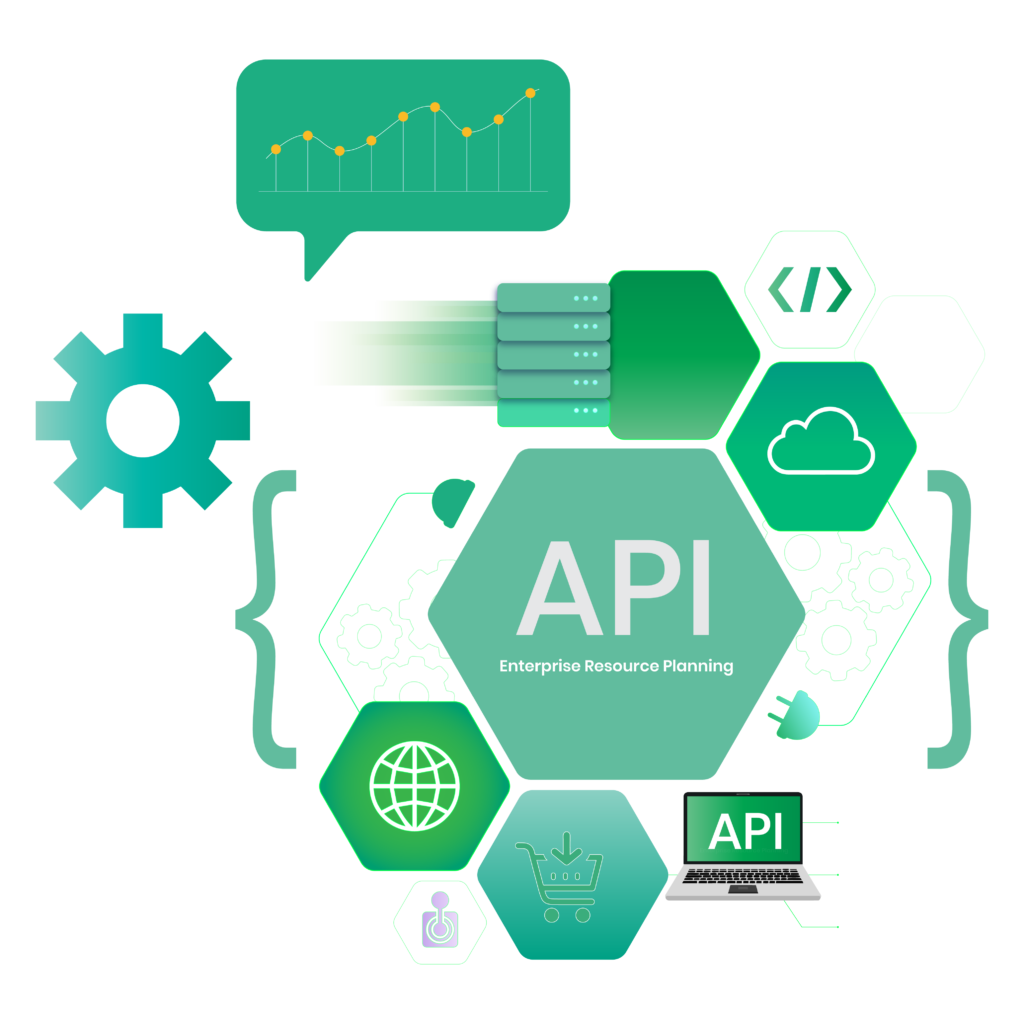
Inquid.net's APM API is a unified layer for all payment methods. Whether accepting Google Pay, BLIK, or PayNow, your integration logic remains identical: same API call, response, and webhooks. New methods added to our library are instantly available without extra development. This streamlines your roadmap and ensures your platform stays globally competitive without the need for constant coding.

Unified API and Global Coverage

Multi-APM reconciliation is hard because methods settle at different speeds and currencies. Inquid.net normalises this: every transaction appears in one dashboard with the same data structure and settlement schedule. All data is reported in a single reconciliation file compatible with your accounting system. This removes the administrative burden of managing diverse data from many sources.

Unified Reporting and Reconciliation

Multi-APM reconciliation is hard because methods settle at different speeds and currencies. Inquid.net normalises this: every transaction appears in one dashboard with the same data structure and settlement schedule. All data is reported in a single reconciliation file compatible with your accounting system. This removes the administrative burden of managing diverse data from many sources.

Compliance and Regulatory Management

Each APM has its own rules like PSD2, NPCI, or MAS guidelines. Inquid.net’s infrastructure manages these frameworks simultaneously. Your business can accept payments globally without navigating each jurisdiction's regulatory requirements independently. Our team monitors changes and updates integrations proactively, ensuring continuous compliance without any additional work from your internal team.

Multi-Currency Settlement and Logic

APMs use local currencies, and Inquid.net provides full multi-currency support. Whether a customer pays in SGD, PLN, INR, or EUR, funds are collected in that currency and settled to you at transparent FX rates. There are no hidden conversions or currency mismatch surprises. This clarity allows for better financial planning and ensures your international revenue is managed with total precision.

Mobile Checkout and Billing Systems

Most APM deals are mobile-first. Google and Apple Pay render natively, while Inquid.net handles complex recurring billing mandates like SEPA or UPI AutoPay. We manage the entire lifecycle: initial auth, mandate storage, and scheduled collections. We ensure mobile interactions are frictionless and subscription revenue remains stable through automated retry logic and clear customer notifications.

Refund and Dispute Platform Control

Refunds and disputes vary by method; some allow instant reversals while others have no chargeback rules. Inquid.net standardises this through a single API call, handling method-specific processing automatically. Dispute workflows are adapted to each method's rules and timeframes. This unified approach reduces operational complexity and provides a consistent experience for your support teams.
APM Solutions
KEY BENEFITS

The Business Impact of Inquid.net's APM Solutions

Merchants who add locally preferred APMs to their checkout report conversion rate improvements of 20–35% among customers in markets where those methods are dominant. For a business generating $500K monthly from a market like the Netherlands, achieving iDEAL acceptance can meaningfully increase that figure without any change to marketing spend or product offering.

In markets across Asia, Africa, and Latin America, significant consumer segments lack traditional credit cards but actively transact via mobile wallets and local payment apps. Inquid.net's APM coverage includes methods specifically designed for these consumers — enabling your business to access addressable markets that are entirely unreachable through card-only acceptance.

Bank transfer APMs carry lower interchange costs than card rails in most markets. By offering and incentivising preferred bank transfer methods where they align with customer preferences, high-volume merchants can shift a meaningful proportion of transaction volume to lower-cost rails — delivering processing cost savings that compound significantly over time at scale.

Customers in every market have a default level of trust for payment methods they recognise and use daily. A Polish consumer who sees BLIK at checkout trusts that checkout implicitly. A Singaporean consumer who sees PayNow knows their funds are protected by familiar rails. Offering locally trusted payment methods signals to customers in each market that your business understands and respects their preferences — accelerating trust-building in markets where brand recognition is still developing.

Without Inquid.net, supporting 10 APMs across 8 markets would require 10 separate integrations, 10 separate compliance reviews, and 10 separate reconciliation workflows. With Inquid.net, the same 10 APMs are accessed through one API, reconciled in one dashboard, and managed under one commercial agreement — reducing the operational overhead of multi-market APM acceptance to a fraction of what it would otherwise cost.

When a customer's card is declined — whether due to fraud prevention, insufficient funds, or issuer restrictions — the presence of APM alternatives at checkout gives them an immediate alternative path to complete the purchase. Merchants who offer multiple payment methods consistently experience lower cart abandonment on declined payment attempts, because customers with a preferred alternative are far more likely to complete the purchase than those faced with a single failed payment and no alternative.

DIGITAL WALLETS

Google Pay, Apple Pay & the Rise of the Digital Wallet

Digital wallets are the fastest-growing APM category globally — and for good reason. They combine the convenience of stored card credentials with the security of tokenised transactions and biometric authentication, delivering a checkout experience that is faster, safer, and more trusted than manual card entry for a growing proportion of online and mobile consumers.

Google Pay

Google Pay serves 2 billion Android users globally as a primary mobile checkout tool. It uses device-specific tokens so card numbers are never shared. Inquid.net supports in-app and web payments with recurring billing. Checkout takes just two taps, boosting success rates via biometric device unlocks. This reduces friction and errors compared to manual entry, making it an essential, secure asset for any modern mobile merchant.

Apple Pay

Apple Pay is the top wallet for iOS and Safari users on iPhone, Mac, and Apple Watch. Using Face ID or Touch ID, it converts 60% better than manual forms since customers never type card details. Transactions use secure tokens via biometric auth. Inquid.net supports web and in-app checkouts plus subscriptions. For businesses with high iOS traffic in Western markets, it is a vital lever to increase revenue and build total trust.

Samsung Pay

Samsung Pay gives Samsung users a flexible wallet supporting both NFC and MST tech. This makes it compatible with both modern and older retail terminals. For merchants with online and offline stores, it is a key addition to the payment stack. It bridges the gap between digital ease and legacy hardware, ensuring customers can pay anywhere. Supporting this method helps brands capture a larger share of the diverse Android market.

Alipay & WeChat Pay

For those serving Chinese consumers, Alipay and WeChat Pay are essential. They hold 90% of China's mobile market. Inquid.net enables businesses outside China to accept these wallets in the customer's home currency. This is vital for capturing revenue from a massive global consumer group. Our system handles all conversion and regulation automatically. Offering these methods ensures you stay accessible to millions of active users.

REGIONAL & LOCAL PAYMENT METHODS

The World's Most Important Local Payment Methods - Covered

Beyond global digital wallets, every major market has its own ecosystem of preferred payment methods — some bank-transfer based, some mobile-app based, some real-time instant payment schemes — that represent the majority of domestic e-commerce in their regions. Here is Inquid.net's coverage across the world's key markets.
PayNow — Singapore

Singapore's national real-time payment scheme, operated by the Association of Banks in Singapore. PayNow allows instant transfers using mobile number, NRIC, or UEN — no bank details required. It is used by over 90% of Singapore bank account holders and is the dominant payment method for domestic online commerce. Inquid.net's PayNow integration enables merchants to accept QR-code-initiated PayNow payments from Singapore consumers with real-time payment confirmation, immediate funds availability, and zero chargeback risk.

BLIK — Poland

BLIK is Poland's dominant mobile payment system, operated by Polski Standard Płatności. Customers generate a six-digit one-time code from their banking app and enter it at checkout — no card details, no account numbers, no stored credentials. BLIK has achieved extraordinary penetration in Poland, with over 15 million active users and billions of transactions annually. For any merchant targeting Polish consumers, BLIK acceptance is effectively mandatory — and Inquid.net delivers it fully integrated into the standard checkout flow.

iDEAL — Netherlands

iDEAL is the Netherlands' most used online payment method by a wide margin — accounting for over 60% of domestic e-commerce transactions. It is a real-time bank transfer scheme supported by all major Dutch banks, allowing customers to pay directly from their bank account without sharing card details or creating payment platform accounts. Inquid.net's iDEAL integration supports the current iDEAL 2.0 standard, with real-time payment confirmation and automated reconciliation.
UPI — India

The Unified Payments Interface — operated by the National Payments Corporation of India — is the infrastructure behind India's payment revolution. UPI processed over 100 billion transactions in 2023 and is used by over 300 million Indians monthly. It enables real-time bank-to-bank transfers initiated via QR code, mobile number, or Virtual Payment Address (VPA) through apps including Google Pay, PhonePe, and Paytm. For merchants targeting Indian consumers, UPI acceptance is the single most important APM to enable.
Bancontact — Belgium

Bancontact is Belgium's national debit payment scheme, covering over 17 million cardholders — essentially the entire adult Belgian population. It supports online payments via Bancontact's mobile app (Payconiq by Bancontact) and via QR code. Belgian consumers show strong preference for Bancontact over international card schemes for domestic purchases, making it essential for any merchant targeting the Belgian market through Inquid.net's integrated APM stack.
Twint — Switzerland

Twint is Switzerland's leading mobile payment app, with over 5 million active users in a country of 8.7 million people. Customers pay via QR code scan or Twint number entry directly from their Twint-linked bank account. Twint is used across online, in-app, and physical point-of-sale environments. For merchants selling to Swiss consumers — particularly in retail, hospitality, and events — Twint acceptance drives meaningful conversion improvement among Swiss-resident customers.
MB Way — Portugal

MB Way is Portugal's most popular mobile payment solution, developed by SIBS and connected to the Multibanco ATM network. Portuguese consumers use MB Way for online payments, in-app purchases, and person-to-person transfers via their phone number. With over 4 million active users, MB Way accounts for a significant and growing share of Portuguese e-commerce — making it an important inclusion in any APM stack targeting Iberian markets.

SEPA Direct Debit — 36 European Countries

SEPA Direct Debit enables merchants to pull payments directly from customers' European bank accounts under a mandate authorisation — making it ideal for subscription businesses, B2B invoicing, and any recurring payment model where card-based billing introduces unnecessary friction or cost. Inquid.net's SEPA Direct Debit integration covers all 36 SEPA member countries and supports both Core and B2B scheme variants, with mandate management and automated collections built in.
Open Banking Pay — United Kingdom

UK Open Banking — enabled by PSD2 regulation — allows merchants to initiate payment requests directly from customer bank accounts via their banking app, without card rails or intermediary networks. Open Banking Pay offers instant settlement, no chargebacks, and lower processing costs than card payments. Inquid.net's Open Banking integration covers the UK's major banks and building societies, making it available to the vast majority of UK consumers with online banking access.

This is a selection of the most significant APMs in Inquid.net’s portfolio. Our full library covers 100+ payment methods across 50+ countries — including PayID (Australia), Pix (Brazil), PromptPay (Thailand), FPX (Malaysia), GCash (Philippines), Klarna, Afterpay, and many more. Contact our team to confirm coverage for your specific target markets.

FREQUENTLY ASKED QUESTIONS

APM Solutions FAQs - Everything You Need to Know

The most common questions our merchants ask about alternative payment methods — answered in full so you can make a confident decision about your APM strategy.

Alternative Payment Methods (APMs) are any payment option that operates outside traditional credit and debit card rails. They include digital wallets (Google Pay, Apple Pay, Alipay, WeChat Pay), real-time bank transfer schemes (iDEAL, PayNow, UPI, Open Banking Pay), mobile-first payment apps (BLIK, MB Way, Twint), buy-now-pay-later solutions, SEPA Direct Debit, prepaid vouchers, and many more. The key differences from credit cards are: APMs often operate on bank transfer rails with no interchange fees and no chargebacks; they are typically tied to a customer's bank account rather than a credit line; many are mobile-native with biometric authentication built in; and in many markets, they carry higher consumer trust than card payments because they are operated by familiar domestic institutions.

Inquid.net's APM library currently covers 100+ payment methods across 50+ countries. Key supported methods include: digital wallets — Google Pay, Apple Pay, Samsung Pay, Alipay International, WeChat Pay; Southeast Asia — PayNow (Singapore), GrabPay, GCash (Philippines), PromptPay (Thailand), FPX (Malaysia), DuitNow (Malaysia); South Asia — UPI, Paytm, PhonePe (India); Europe — iDEAL (Netherlands), BLIK (Poland), Bancontact (Belgium), Twint (Switzerland), MB Way (Portugal), SEPA Direct Debit (36 countries), Open Banking Pay (UK), Sofort, Giropay, EPS; Oceania — PayID (Australia), POLi; Latin America — Pix (Brazil), OXXO (Mexico); and a growing selection of Middle Eastern and African local methods. Contact our team for a complete current list and to confirm coverage for your specific target markets.

All of Inquid.net's supported APMs are accessible through a single unified API integration — this is one of the core design principles of our APM Solutions platform. You integrate once with Inquid.net's payment API, and every supported payment method becomes immediately available to your checkout. When Inquid.net adds new payment methods to the library, they become available to you without any additional integration work. The API response and webhook structures are normalised across all payment methods, so your backend handles every APM outcome through the same logic regardless of which specific method the customer chose.

Google Pay operates through the Google Pay API for Web (for browser-based checkouts) or the Google Pay API for Android (for native Android app checkouts). When a customer clicks the Google Pay button, a payment sheet appears showing their saved cards and bank accounts. They select their preferred payment method and authenticate via their device's unlock mechanism (PIN, fingerprint, or face recognition). Google generates a payment token that is sent to Inquid.net's gateway for processing — the actual card number is never transmitted. On the implementation side, Inquid.net handles the tokenised payment processing and acquiring. You are responsible for rendering the Google Pay button and passing the payment token to our API — our documentation provides the complete integration guide and JavaScript SDK to simplify this process. Merchant registration with Google is required but straightforward and handled as part of your Inquid.net onboarding.

Apple Pay and Google Pay are functionally similar — both tokenise the underlying card and authenticate via device biometrics — but they differ significantly in their technical implementation and availability. Apple Pay is available exclusively in Apple's ecosystem: Safari on iPhone, iPad, Mac, and Apple Watch. It uses the Apple Pay JS API for web checkout and the PassKit framework for in-app payments. A domain verification step is required, and Apple Pay is only displayed to customers on compatible Apple devices using Safari. Google Pay, conversely, is available across Android devices and Google Chrome browsers on any device, including desktop. For most merchants, offering both provides comprehensive digital wallet coverage across the vast majority of their customer base.

BLIK is Poland's dominant mobile payment system, developed by Polski Standard Płatności and supported by all major Polish banks. Its mechanism is elegantly simple: the customer opens their banking app, generates a six-digit one-time BLIK code, and enters it at checkout — the payment is immediately confirmed from their bank account without sharing any card details, account numbers, or personal banking credentials with the merchant. BLIK has achieved exceptional adoption in Poland — over 15 million active users, representing roughly 40% of Poland's entire population — and processes billions of transactions annually. For any business targeting Polish consumers, BLIK is effectively the default expected payment method. Merchants without BLIK face significantly higher checkout abandonment rates among Polish shoppers.

PayNow is Singapore's national real-time funds transfer scheme, operated by the Association of Banks in Singapore (ABS) and supported by all major Singapore retail banks. It allows instant, irrevocable bank-to-bank transfers using a proxy identifier — mobile number, NRIC/FIN, or UEN (for businesses) — rather than requiring the recipient's bank account details. For e-commerce, PayNow is typically implemented via QR code at checkout: the customer scans the QR code with their banking app and confirms the payment, which is received and confirmed in real time. PayNow carries no transaction fees for consumers, is trusted by over 90% of Singapore's banked population, and offers merchants immediate payment confirmation with no chargeback risk. Any business targeting Singapore consumers — particularly in retail, food and beverage, events, and services — should prioritise PayNow as a core payment method.

Chargeback exposure varies significantly across APM types. Bank transfer APMs — including PayNow, iDEAL, UPI, Open Banking Pay, Pix, and SEPA Credit Transfer — are irrevocable once confirmed. There is no chargeback mechanism because funds move directly between bank accounts, and the payment is final. This is a significant advantage for merchants in chargeback-sensitive categories. Digital wallet transactions (Google Pay, Apple Pay) are typically processed on card rails underneath the wallet tokenisation layer, meaning they carry the same chargeback rules as the underlying card network. SEPA Direct Debit allows consumers to dispute and reverse transactions within a specified window. Inquid.net's dispute management system handles each APM's specific dispute rules — where disputes are possible, you have access to evidence submission tools and representment support through the same portal used for card disputes.

Yes — Inquid.net supports recurring billing across multiple APM types, though the specific mechanism varies by payment method. Digital wallets (Google Pay, Apple Pay) support recurring billing through tokenised stored credentials — the initial payment authorises the stored credential, which is then used for subsequent charges without requiring customer re-authentication for each billing cycle. SEPA Direct Debit is purpose-built for recurring billing via the mandate framework — customers sign a mandate authorising future collections, which Inquid.net manages through the complete lifecycle. UPI AutoPay in India allows merchants to set up recurring mandates with defined amount and frequency caps, covering subscription billing, EMI payments, and utility collections. Our team will advise on the optimal recurring billing approach for each APM in your specific use case.

All APM transactions processed through Inquid.net are settled and reconciled through the same unified system as your card transactions. In your Inquid.net merchant dashboard, APM transactions appear alongside card transactions in the same transaction feed, with the payment method clearly identified for each transaction. Settlement timelines vary by APM: bank transfer methods like PayNow and iDEAL typically settle in near-real time or same-day; SEPA Direct Debit settles within 1–3 business days of the collection date; digital wallet transactions settle on the same timeline as the underlying card transaction. All settlements are reflected in your daily settlement report, normalised into your chosen settlement currency. Reconciliation files are available in standard formats compatible with major accounting platforms.

Enable Global APMs for Your Business Today

One integration. 100+ payment methods. 50+ countries. Connect your business to how the world actually pays — and watch your global conversion rates respond.

Scroll to Top