
For businesses operating in industries like forex, gaming, IPTV, crypto, and online betting, payment processing is not just a necessity—it’s a major operational cost.
Unlike standard businesses, high-risk industries face higher fees, stricter compliance requirements, and complex payment structures.
Understanding the cost of high-risk payment processing is essential to maintaining profitability and choosing the right provider.
Cost of High-Risk Payment Processing
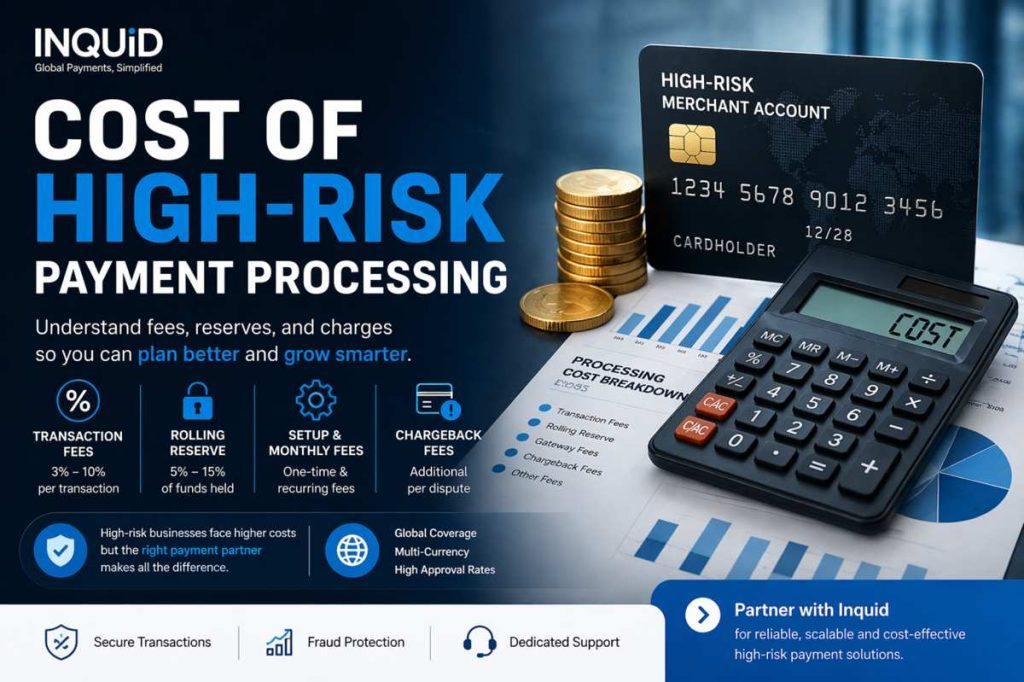
The cost of high-risk payment processing typically ranges from:
- 3% to 10% per transaction
- Rolling reserves between 5% to 15%
- Setup and monthly gateway fees depending on provider
The exact cost depends on factors such as industry type, chargeback risk, transaction volume, and geographic coverage.
What is High-Risk Payment Processing?
High-risk payment processing refers to handling transactions for businesses that are more likely to experience:
- High chargeback rates
- Regulatory scrutiny
- Cross-border transactions
- Fraud risks
These businesses require a specialized high-risk payment gateway and merchant account to process payments securely and efficiently.
Key Factors That Affect Payment Processing Costs
Understanding what drives costs helps you optimize your setup.
1. Industry Type
Certain industries are considered higher risk than others.
Examples:
- Forex trading
- Online casinos and betting
- IPTV and subscription services
- Adult businesses
- Crypto platforms
Higher risk = higher processing fees.
2. Chargeback Ratio
Chargebacks significantly impact pricing.
- Low chargebacks → Lower fees
- High chargebacks → Higher fees + penalties
Providers price risk based on your historical performance.
3. Transaction Volume
Higher volume businesses can often negotiate better rates.
- Low volume → Higher fees
- High volume → Discounted pricing
4. Geographic Reach
Processing international payments increases complexity and cost.
- Currency conversion fees
- Cross-border transaction fees
- Regional compliance requirements
5. Payment Methods Used
Different payment methods come with different costs.
- Cards → Standard fees
- E-wallets → Medium fees
- Crypto → Variable fees
Breakdown of High-Risk Payment Processing Fees
Here is a typical cost structure:
Transaction Fees
- Typically 3% to 10% per transaction
- Higher for international or high-risk transactions
Rolling Reserve
A percentage of your funds is held by the provider to cover risk.
- Usually 5% to 15%
- Held for 90–180 days
Setup Fees
- One-time onboarding cost
- Varies based on provider and complexity
Monthly Fees
- Payment gateway maintenance
- Account management
Chargeback Fees
- Fixed fee per chargeback
- Additional penalties for high ratios
High-Risk vs Standard Payment Processing Costs
| Feature | High-Risk Processing | Standard Processing |
|---|---|---|
| Transaction Fees | 3% – 10% | 1% – 3% |
| Approval Rate | High (specialized) | Low (restricted) |
| Risk Management | Advanced | Basic |
| Global Payments | Supported | Limited |
High-risk processing costs more, but it provides access to markets that standard providers cannot support.
How to Reduce High-Risk Payment Processing Costs
Businesses can optimize costs by improving their risk profile.
Improve Chargeback Management
- Use fraud detection tools
- Monitor transactions in real-time
- Maintain clear refund policies
Optimize Website Compliance
- Terms and Conditions
- Privacy Policy
- Refund Policy
This builds trust with payment providers.
Choose the Right Payment Partner
A specialized provider can offer:
- Better rates
- Higher approval rates
- More stable processing
Increase Transaction Volume
Scaling your business can help negotiate lower fees over time.
Why Choosing the Right Provider Matters
Not all providers price risk the same way.
A reliable provider offers:
- Transparent pricing
- Scalable solutions
- Better approval rates
- Strong risk management
Why Choose Inquid for High-Risk Payment Processing?
Inquid provides tailored solutions for high-risk businesses with a focus on performance and scalability.
Key Advantages:
- Competitive pricing for high-risk industries
- High approval rates
- Global payment gateway support
- Multi-currency processing
- Advanced fraud and chargeback management
- Dedicated support
Inquid helps businesses balance cost with reliability.
Frequently Asked Questions
Why is high-risk payment processing expensive?
It involves higher fraud risk, chargebacks, and regulatory requirements, which increase operational costs for providers.
What is a rolling reserve?
A rolling reserve is a percentage of your revenue held by the provider to cover potential chargebacks or disputes.
Can I reduce processing fees?
Yes, by improving chargeback ratios, increasing volume, and working with the right provider.
Is high-risk payment processing worth it?
Yes, because it enables businesses to operate and scale in industries where standard providers fail.
Final Takeaway
The cost of high-risk payment processing may be higher than standard processing, but it is essential for businesses operating in restricted industries.
Understanding the cost structure helps you:
- Plan your margins
- Choose the right provider
- Optimize your payment strategy
Businesses that work with specialized providers like Inquid gain access to reliable, scalable payment solutions.
Get Started with Inquid
Get a high-risk payment solution tailored to your business and start accepting payments globally with confidence.