When it comes to accepting card payments, not all businesses are treated equally. Companies operating in fast-moving, high-chargeback, or regulated industries are often labeled high risk—making it harder to get approved for a regular merchant account.
That’s where high risk payment processors come in.
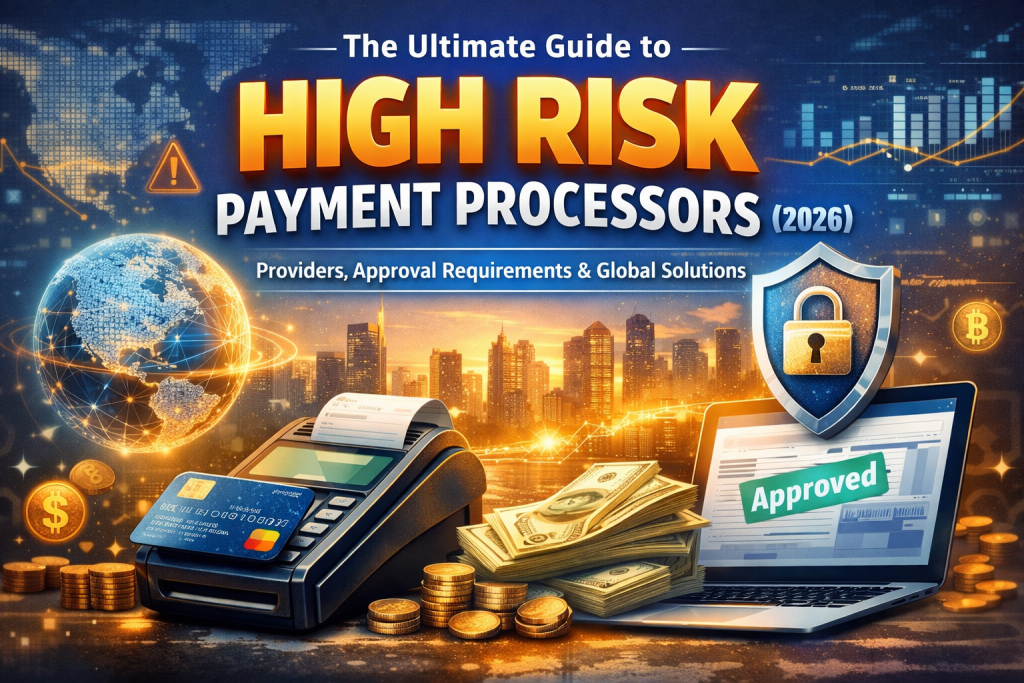
In this comprehensive guide, you’ll learn what high risk payment processors are, how they work, the industries they serve, what approval requires, and which global providers lead the market in 2026.
What Is a High Risk Payment Processor?
A high risk payment processor is a specialized service provider that supports businesses operating in industries where banks detect higher levels of fraud, chargebacks, or regulatory scrutiny.
These processors:
- Work with acquiring banks willing to board high-risk merchants
- Offer more robust fraud controls
- Absorb higher payment risk in exchange for slightly higher fees
They are different from standard providers like Stripe or PayPal, which may instantly freeze, hold, or terminate accounts operating in restricted sectors.
Who Needs a High Risk Payment Processor?
Not every business is considered high risk—but many fast-growth industries are.
Common examples include:
- Cryptocurrency exchanges
- Forex trading and financial services
- Online gaming, gambling, and betting
- CBD, vape, and nutraceutical brands
- Adult entertainment and escort services
- High-ticket travel and tourism
- Subscription-based eCommerce
- Dropshipping and offshore fulfillment
- Telemedicine and digital health
- Web hosting, SaaS, and marketing services
- MOTO (Mail Order/Telephone Order) merchants
If your business regularly deals with refunds, card-not-present payments, or cross-border customers, banks may flag it as high risk.
Why Do Banks Label Businesses High Risk?
There are a few primary reasons a merchant falls into the “high risk” category:
Higher Chargeback Ratios
Visa/Mastercard generally allow up to 0.65%–0.9% chargebacks.
Industries like travel and subscriptions often exceed it.
Fraud Exposure
Card-not-present channels (online, over phone) naturally face more:
- Stolen cards
- Friendly fraud
- Disputed transactions
Regulatory Complexity
Certain sectors—CBD, gaming, crypto—require extra legal and compliance checks.
Cross-Border Processing
International transactions increase currency risk and settlement time.
Limited Operating History
Startups or businesses with weak credit scores face more scrutiny.
How High Risk Payment Processors Work
High risk payment processors provide all the same core services as traditional providers, plus additional risk mitigation tools.
They typically include:
End-to-End Payment Flow
Customer → payment gateway → acquiring bank → settlement → payouts
Fraud & Risk Scoring
Using:
- 3D Secure 2.0
- AI-based transaction screening
- Velocity checks
- Device fingerprinting
Rolling Reserves
A percentage of funds is temporarily held to offset potential disputes or chargebacks.
Longer Underwriting & Monitoring
Financial institutions evaluate:
- Business model viability
- Website policies
- Product descriptions
- Processing history
Key Features to Look For in High Risk Payment Processors
Whether you run a travel agency or a gaming platform, look for providers offering:
- High approval rates
- Chargeback alerts & prevention tools
- Multi-currency support
- Global acquiring (not restricted to US/UK)
- Multi-channel acceptance (web, app, invoice, subscription)
- Fast onboarding
- Transparent pricing
- 24/7 merchant support
The stronger the support system, the lower your risk of account freezes or losses.
Top High Risk Payment Processors in 2026
Here are some of the leading global providers supporting high risk merchants:
1. Inquid
- Global onboarding support
- Multi-currency acceptance
- Competitive processing fees
- Ideal for cross-border and emerging industries
2. WebPays
- Strong presence in high-risk sectors
- Custom gateway solutions
- Good for EU, UAE & Asia merchants
3. Durango Merchant Services
- US-based specialists
- Known for education and support
4. PaymentCloud
- Works with a large network of acquiring banks
- Excellent for small-to-medium eCommerce
5. EMerchantBroker (EMB)
- Industry veteran
- Robust fraud management tools
6. PayKings
- High approval success rate
- CBD, vape, and nutraceutical experts
Each provider offers different strengths—industry fit is key.
Pricing & Fees Breakdown
Fees vary depending on risk, geography, and industry, but generally include:
- Transaction fees: 2.9–5.5% per transaction
- Monthly processing fees
- Gateway fees
- Rolling reserves: 5–10%
- Chargeback fees: $25–$100 per dispute
- Early contract termination charges (depending on provider)
High fees reflect higher assumed financial exposure.
Approval Requirements & Documents Needed
To secure approval, merchants must typically provide:
- KYC documents (ID, passport, company registration)
- Bank account details
- 3–6 months processing statements (if available)
- SSL-secure website
- Refund, privacy, and delivery policy
- Product or service description
- Chargeback management plan
Completeness speeds up onboarding drastically.
Tips to Increase Approval Success
- Reduce chargebacks and disputes before applying
- Ensure your website is professionally built and compliant
- Offer multiple customer support channels
- Display clear refund and privacy policies
- Avoid misleading marketing claims
- Be transparent about business model & fulfillment timelines
The more transparent your business, the faster your approval.
High Risk Payment Processors for Global Merchants
In 2026, merchants are expanding beyond borders.
Top regions offering strong high-risk support include:
🇺🇸 United States
Largest high-risk acquiring market—strict underwriting, competitive rates
🇬🇧🇪🇺 UK & Europe
Ideal for regulated industries with stable compliance systems
🇸🇬 Singapore
Gateway to Southeast Asia & fintech innovation hub
🇦🇪 UAE
Popular for gaming, travel and eCommerce merchants
Offshore Hubs
Mauritius, Hong Kong, Seychelles—flexible underwriting + multi-currency options
Global positioning means opportunities beyond local banks.
Frequently Asked Questions
How long does approval take?
Typically 3–10 business days, depending on documentation.
Can I apply without processing history?
Yes, but expect tighter monitoring and possibly higher reserves.
Can I get approved if I’ve been declined before?
Absolutely—specialized providers take a fresh approach.
Final Thoughts
High risk payment processors aren’t just for “risky” industries—they are essential partners for innovative, fast-growth, and global businesses.
With the right provider, businesses can:
- Accept international payments,
- Minimize chargebacks,
- Scale into new markets,
- And ensure uninterrupted cash flow.
Ready to apply?
Explore flexible global payment processing with Inquid today and get your business approved faster.